Pick a level, then a small group
N5 to N1, split into themed groups of eight to fifteen. Compass directions. Days and calendar. Look-alikes of 囗. Small enough to finish in one sitting.
 Fast Kanji Quiz
 iPhone · JLPT N5 to N1
You do not forget kanji. You confuse them. This drills the exact pairs you mix up, and it never lets you off with a maybe.

No account. No network. Works on a plane.
Try one now
Which one is it? Tap a kanji.
That is the whole game. On a real card the clock is yours to set, from two seconds to eight.
The actual problem
Kanji do not fall out of your head one at a time. They collide. Two characters that share a component, or a reading, or a meaning close enough to blur, and the wrong one comes to hand first. Flashcards that show a character alone never test the thing that fails.
So every card here puts the two rivals side by side and makes you choose between them.
How it works
N5 to N1, split into themed groups of eight to fifteen. Compass directions. Days and calendar. Look-alikes of 囗. Small enough to finish in one sitting.
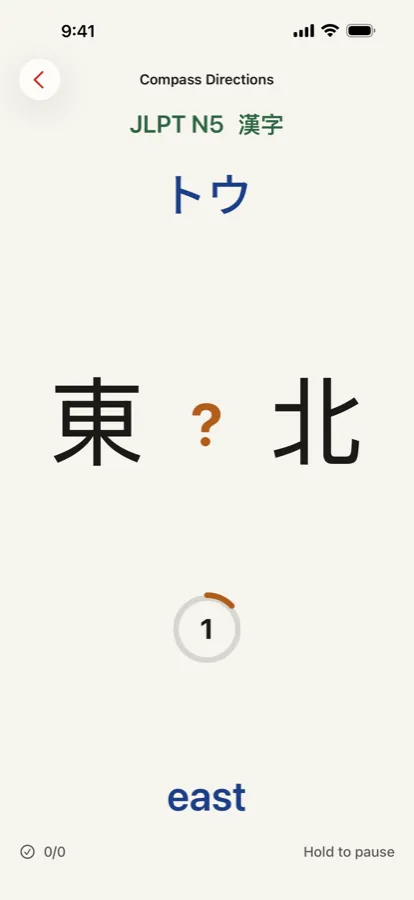
A reading at the top, a meaning at the bottom, and the two kanji you are most likely to confuse. Change your mind as often as you like until the clock hits zero.
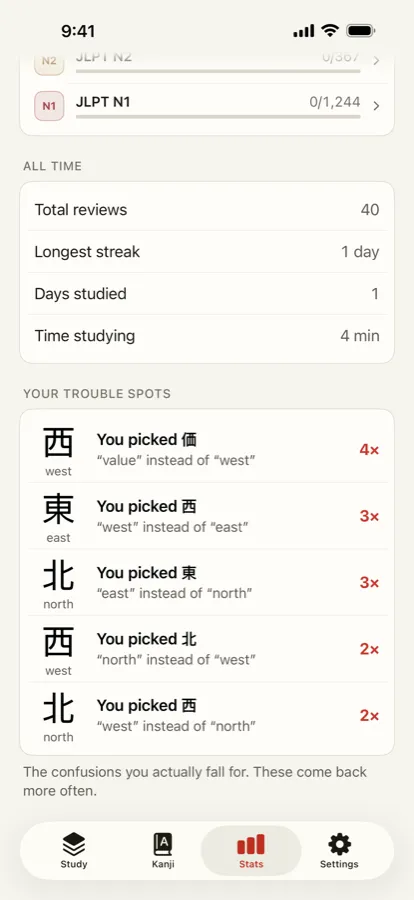
Every answer is timed and recorded. The pairs you genuinely fall for come back more often, and the ones you know cleanly get out of your way.
What is inside
The complete modern JLPT mapping, with meanings, on and kun readings, stroke counts and frequency.
Every distractor is scored offline for visual, semantic and reading similarity, then checked so the card is still answerable.
A spaced-repetition scheduler that treats how fast you answered as part of how well you knew it.
Not just the buttons. All 2,230 kanji meanings are translated, which is the part that actually decides whether you can use the app.
Everything ships inside the app and every review stays on your device. It works in airplane mode.
The drill never ends on its own, so it stops now and then and hands you a piece of Japanese history.
A look at it
The card
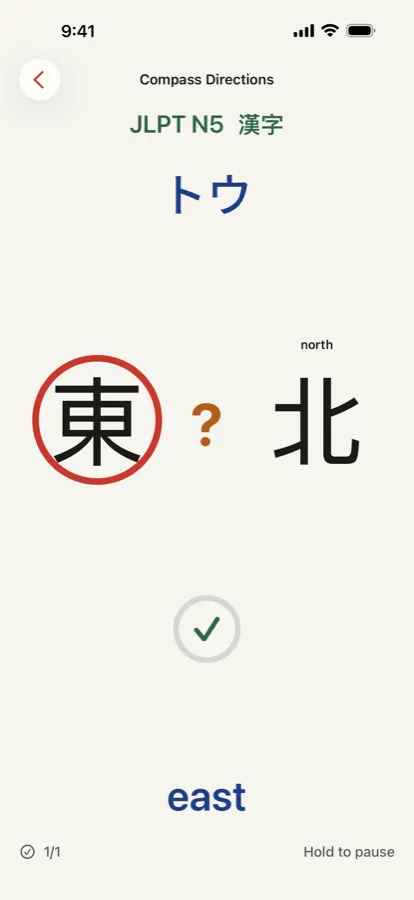
The reveal
Your trouble spots
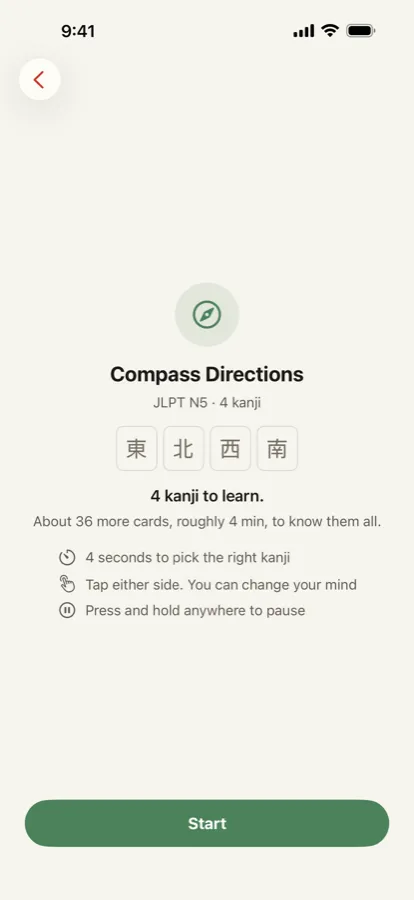
Before you start
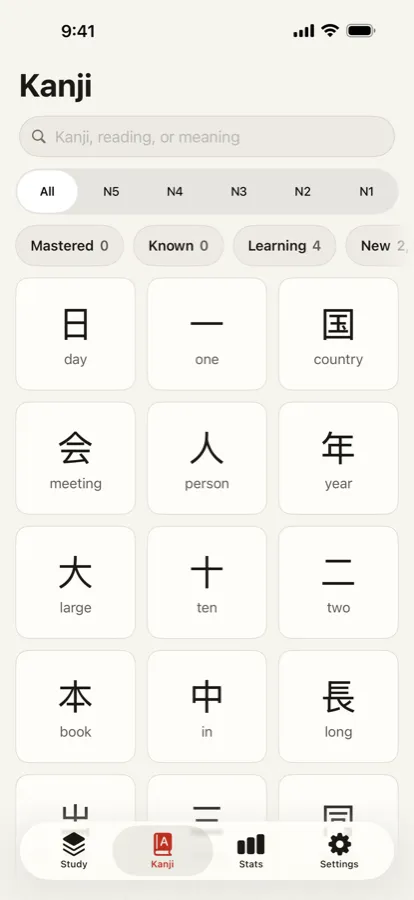
Every kanji
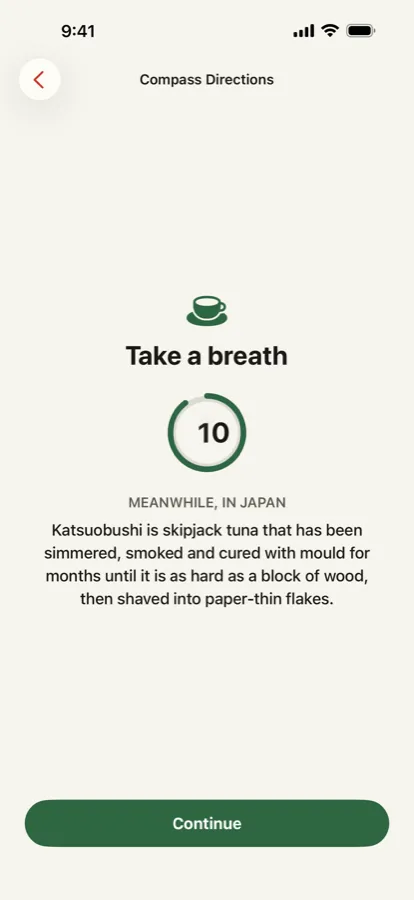
The break
Twenty languages
Kanji meanings, the interface, and 200 history facts, all translated. A learner reading "south" in a language they are still learning is doing two jobs at once.
Questions
You need kana. Readings are shown in hiragana and katakana, and the drill starts at N5, which is the first 80 characters.
No. There is no sign-up and no login. Your progress lives on your device.
Yes. Every kanji, meaning and reading ships inside the app, so the drill runs with no connection at all.
All of them, N5 through N1, which is 2,230 characters in total.
From openly licensed research and character-decomposition data, scored before the app ships and checked against a set of human-authored confusion pairs.
Not yet. It is an iPhone app, built around two thumbs reaching two targets.
No account, no network, and it works on a plane.